How to escape hardstuck in Marvel Rivals by fixing your own gameplay before blaming teammates
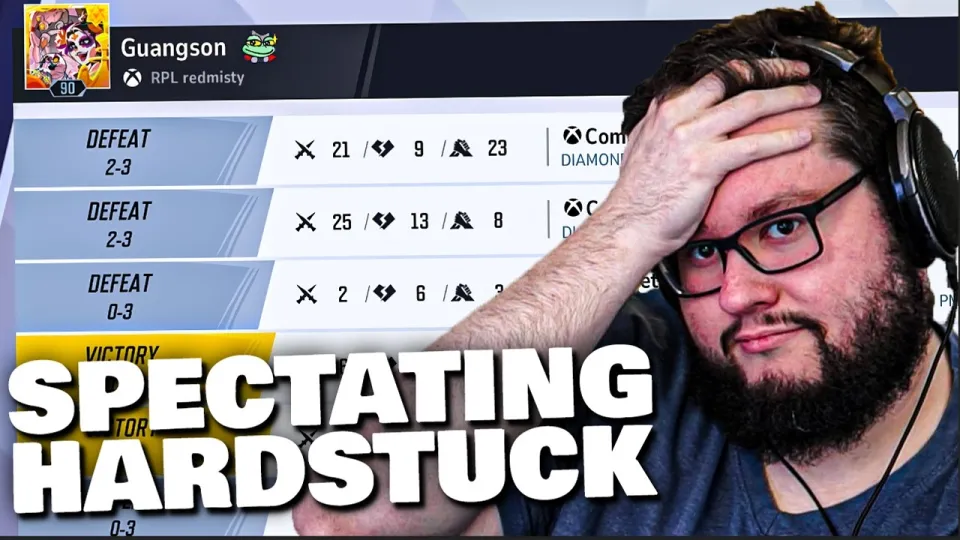
Video: I Spectated Someone Who Claimed To Be Hardstuck In Marvel Rivals
You can order the same kind of articles for your own video to boost it on YouTube and Google. Just message the Telegram bot @sat_sit_bot. The bot writes and publishes the articles itself (with your YouTube video embedded) on popular topical websites (no ads). Free trial — 50 articles.
To stop being hardstuck in Marvel Rivals, stop auditing your teammates and start auditing your own decisions: cooldown usage, positioning, health pack awareness and role discipline. The most reliable way to climb is to review your own matches the way an outside coach would, because the mistakes that keep you in one rank are almost always invisible to you and obvious to everyone else. Flats, a veteran Overwatch analyst who now covers Marvel Rivals, built an entire breakdown around exactly this problem, and you can watch his live ranked reviews and coaching sessions on his Twitch channel.
What the Marvel Rivals hardstuck spectate actually showed
The player who asked for the review described himself as hardstuck and blamed his teammates, but the account was sitting in Grandmaster, one of the highest tiers in Marvel Rivals. That detail reframes the whole complaint: the issue was not that the matchmaker was holding him down, it was that his own play had plateaued at a level where every opponent punishes the same habits. He was a Spider-Man main who had moved onto support, and the switch exposed how thin his understanding of the role was.
The Cloak and Dagger problem: playing half a hero
The most repeated criticism of the session was that the player was effectively playing Dagger and holding Cloak, treating a two-form hero as a single-form healer. Cloak and Dagger share one kit but two distinct jobs: Dagger heals, blinds and controls space with her light wall, while Cloak debuffs, phases the team out of danger and applies the Dark Teleportation utility that wins fights. A support who never swaps forms gives up roughly half of the hero's value, including the escape and the team-wide invulnerability window. If you main Cloak and Dagger in Marvel Rivals, the fix is mechanical: bind both forms, practice swapping mid-fight, and count Dark Teleportation as a defensive ultimate-lite rather than a panic button.
Why negative win rate plus high ego equals a stuck account
A negative win rate combined with a strong opinion about teammates is the clearest diagnostic signal in any ranked ladder. Marvel Rivals uses a performance-influenced point system, so a player can drift upward on strong individual stats even while losing more than he wins, which inflates confidence without improving decision-making. The result is a player who believes he belongs higher, plays with an ego, and repeats the same errors because losses are always someone else's fault. Climbing requires the opposite posture: assume every death is your positioning, every lost fight your cooldown management, and every lost game a list of three things you could have done differently.
Health packs, invisibility and other basics that Grandmaster players should not miss
In the reviewed match, the player walked straight past a health pack while visibly searching for a health pack, a moment that says more about map awareness than any stat line. Invisibility was used as a getaway rather than as a setup tool, which wastes the information advantage the ability is designed to create. These are not exotic high-level concepts; they are the fundamentals that separate a player who belongs in a rank from one who was carried into it. Build a checklist and run it every death: did I know where the nearest health pack was, did I hold my escape until it mattered, and did I use my utility to enable a teammate rather than to save myself?
Common doubts from players who think their teammates are the problem
Viewers of the breakdown pushed back in predictable ways, and the answers are worth spelling out. "My teammates really do throw" is true in individual matches and irrelevant across a hundred of them, because the matchmaker puts equally inconsistent players on both sides over time. "I have good stats, so I should climb" ignores that damage and healing numbers without kills, space and timing can be empty. "Support is a passive role" is false in Marvel Rivals, where Cloak and Dagger, Invisible Woman and Loki all carry fight-winning utility. "I only play one hero" is a choice, not a constraint, and one-tricking a hero whose full kit you do not use is the fastest route to a plateau.
A practical review routine for Marvel Rivals ranked
- Watch one loss per session from the enemy team's perspective, not yours, and note the first moment you were out of position.
- Track cooldown discipline: write down every time you used an escape or utility ability before the fight started.
- Learn the full kit of your main, including the form or mode you avoid, and force yourself to use it for ten matches.
- Log your win rate over the last fifty games rather than your rank, because the number is honest and the badge is not.
- After each death, name the health pack or cover you should have used, which turns map knowledge into a habit.
Where to watch the full Marvel Rivals breakdown and follow Flats
Flats streams ranked Marvel Rivals reviews, spectates and coaching live, and the full session behind this breakdown is available through his channels. Use these links to follow the content:
The takeaway from the Marvel Rivals hardstuck spectate
The player in this Marvel Rivals review was not held back by teammates; he was held back by playing half a hero, ignoring health packs and treating invisibility as a panic button. Flats, the creator behind the breakdown, made the point that ego and a negative win rate are the real ceiling in ranked, and the fix is unglamorous self-review rather than blame. If you want to see the same analysis applied live to other players' matches, follow Flats on Twitch and watch the next ranked review stream. The climb starts with the only account you can actually change.
Key takeaways
- A self-described hardstuck Marvel Rivals player was spectated live and turned out to be in Grandmaster rank, not a low tier.
- The player was a Spider-Man main who switched to support and played Cloak and Dagger as a Dagger-only character, rarely using Cloak's kit.
- He walked past a health pack while looking for a health pack, and his invisibility ability was used as an escape rather than a setup tool.
- His teammates were blamed for losses despite a negative win rate, which is the classic signature of ego-driven ranked stagnation.
- Flats, a long-time Overwatch analyst and streamer, produced the breakdown and streams Marvel Rivals ranked reviews on Twitch.
Source: I Spectated Someone Who Claimed To Be Hardstuck In Marvel Rivals · Markdown version
Questions & answers
Is it possible to be hardstuck in Grandmaster in Marvel Rivals?
Yes, and it is common. Grandmaster is a high tier, but players can still plateau there if their fundamentals, such as cooldown usage and map awareness, stop improving. Being stuck at a high rank usually means the same mistakes are being punished consistently rather than that the matchmaker is unfair.
Why is playing Cloak and Dagger as Dagger only a mistake?
Cloak and Dagger are one hero with two forms, and each form covers different jobs. Dagger handles healing, blinding and space control, while Cloak brings debuffs, phasing and the team-wide Dark Teleportation utility. Ignoring one form means giving up roughly half the hero's kit and much of its fight-winning potential.
Do teammates really hold players back in Marvel Rivals ranked?
In a single match, yes, a teammate can cost you the game. Across dozens or hundreds of matches, the matchmaker places similar players on both teams, so your own decisions are the only consistent variable. A negative win rate over a large sample is a signal about your play, not about your teammates.
How do I review my own Marvel Rivals matches effectively?
Watch a loss from the enemy team's point of view and pause at each death to identify what you could have done differently. Track cooldown usage, note whether you knew where the nearest health pack was, and check whether your utility abilities were used to enable teammates or only to escape. Keep a short written log so patterns become visible.